 |
| Illustration: epicarosario.com.ar |
The Afternoon That Changed Everything
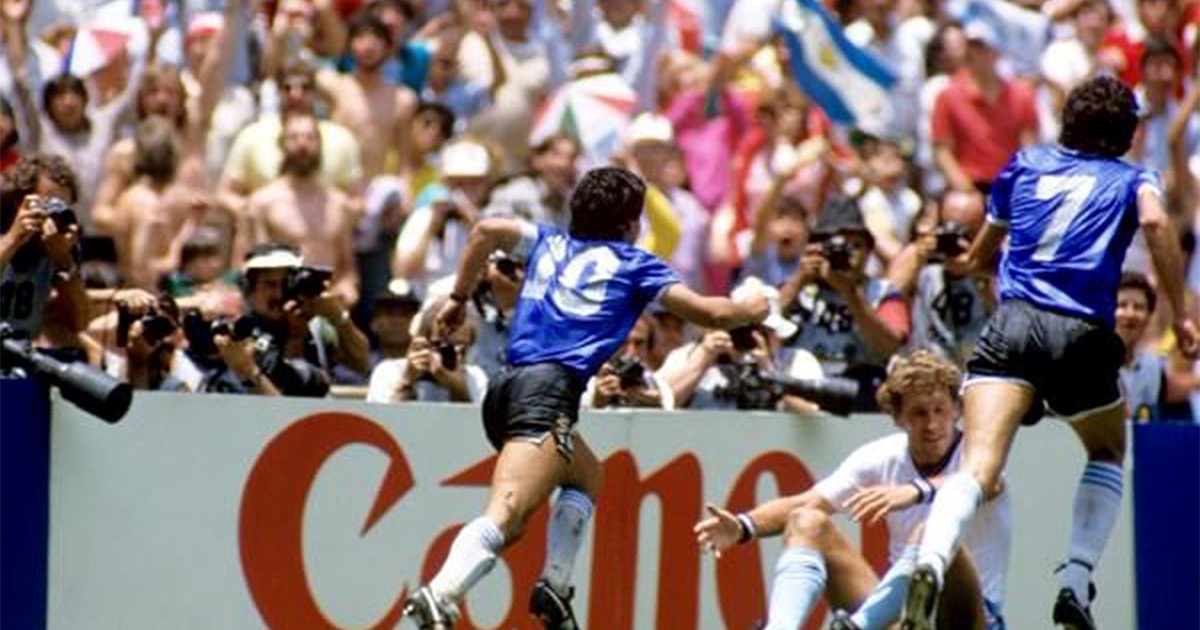
June 22, 1986, began like any other match day at the Estadio Azteca in Mexico City, but what unfolded over those ninety minutes would transcend sport entirely and enter the realm of national mythology. Argentina, a nation still carrying the open wounds of the Falklands War defeat just four years earlier, walked onto the pitch carrying more than athletic ambition. The players carried the weight of a humiliated country, a population that had lost not only a conflict but also its sense of pride and standing in the world. Diego Maradona, a twenty-five-year-old from the impoverished streets of Villa Fiorito, understood this burden better than anyone, having grown up in a country where football was never merely a game but rather a language of hope and identity. The atmosphere in the stadium crackled with tension as fans from both nations watched, knowing this quarter-final carried implications far beyond a simple advancement in the tournament bracket. The English players, professionals focused on their craft, approached the match as another competitive fixture, unaware that their opponents viewed this encounter through a dramatically different lens. What followed would become not just a sporting victory but a moment of collective catharsis, an emotional release that allowed an entire nation to stand tall again when political and military defeat had left it kneeling.
Two Goals, Two Legacies, One Mythology
The match produced two goals that could not have been more different in their execution, yet both came from the same diminutive figure who seemed determined to bend reality to his will that afternoon. The first, the infamous "Mano de Dios," arrived with controversy wrapped around it like a shroud, a moment where deliberate deception and divine providence seemed to merge into something unexplainable. Maradona leaped, his fist striking the ball past English goalkeeper Peter Shilton, and the referee allowed it to stand despite protests that echoed around the world. The second goal, arriving just minutes later, required no interpretation and no forgiveness, a breathtaking sixty-meter dash that saw Maradona dismantle the English defense with the precision of a surgeon and the grace of a dancer. He received the ball in his own half and began a journey that would be replayed millions of times across televisions and screens for generations to come, slaloming past defenders who seemed rooted in place as if they were mere obstacles in a training exercise. The finish, calm and deliberate, completed a masterpiece that football pundits would eventually vote the greatest goal in World Cup history. These two moments, one born of cunning and the other of genius, created a duality that perfectly reflected Maradona himself, a player capable of both deceit and brilliance, a man who understood that winning sometimes required both.
When Sport Becomes Something Larger Than Life
The aftermath of that 2-1 victory rippled through Argentine society in ways that no sports statistician could have predicted or measured with conventional tools. In the streets of Buenos Aires, strangers embraced and wept, their tears carrying not just joy at athletic success but relief from years of national shame that had hung over the country like storm clouds refusing to break. Political analysts and sociologists would spend decades examining how ninety minutes of football accomplished what diplomatic negotiations and economic policies had failed to achieve, giving Argentines permission to feel proud again. The victory did not erase the war dead or rewrite the history of military junta failures, but it created a counter-narrative, a story of triumph that could stand alongside the tragedy. Maradona, initially careful to separate football from politics in his post-match comments, insisted this was merely a sporting contest and nothing more, a stance that reflected both genuine belief and perhaps a desire to let the victory speak for itself without the weight of geopolitical interpretation. Yet as years passed and perspectives shifted, even he would come to understand and articulate what millions already felt in their bones, that certain moments in sport carry meaning far beyond the pitch, becoming cultural touchstones that define how nations see themselves and how they wish to be seen by others.
The Story That Time Transformed Into Legend
What makes the Argentina-England match truly remarkable is not simply what happened on the field but how the narrative evolved and deepened over the following decades, gaining layers of meaning that transformed it from a sporting event into something approaching secular scripture. Maradona himself became the chief architect of this transformation, retelling the story in interviews and autobiographies with new details and interpretations that connected the victory to the war he had initially refused to mention. He spoke of playing for the fallen soldiers, of dedicating his performance to young men who would never return home, reframing what had been athletic achievement as something closer to national service. The blue jersey he wore that day, an improvisation forced by a kit clash, became iconic in its own right, a garment now displayed in museums and reproduced in photographs that adorn the walls of Argentine homes. The English players, to their credit, contributed to the legend through their own dignified responses, acknowledging Maradona's genius while lamenting the controversial first goal, creating a narrative of sporting respect that paralleled the political tensions. Victor Hugo Morales, the Uruguayan commentator whose radio narration became legendary, crafted verbal architecture around the match that transformed his description of the second goal into something like poetry, words that Argentines can still recite from memory four decades later. The referees' decisions to allow play to continue, the tactical battles between managers, the specific movements of supporting players, all became elements of a story that grows rather than diminishes with each retelling.
Why Four Decades Later It Still Matters
Forty years have passed since that afternoon in Mexico City, yet the match continues to resonate with a power that defies the normal lifespan of sporting memories and their gradual fade into historical footnotes. New generations of Argentines, born long after both the war and the World Cup, find themselves drawn to the story, watching grainy footage and feeling an emotional connection to events they never witnessed firsthand. This persistence speaks to something fundamental about how human beings process collective trauma and seek moments of healing that can anchor their national identity in something positive rather than painful. The match serves as a reminder that sport at its highest level can become a vessel for emotions too complex for ordinary language, a space where nations can work through their histories without the bloodshed that so often accompanies political conflict. Maradona's death in 2020 prompted a fresh wave of reflection about his legacy and about this match in particular, with commentators noting that his greatest achievement may have been giving Argentina a story it could tell about itself with pride. The victory against England was not his alone, of course, but it became inseparable from his persona, the foundation upon which his entire mythological status was constructed. As the fortieth anniversary arrives, the match stands not as ancient history but as living memory, an event that continues to teach new generations about resilience, about the possibility of redemption, and about the strange ways that sport can become something far more significant than entertainment.